
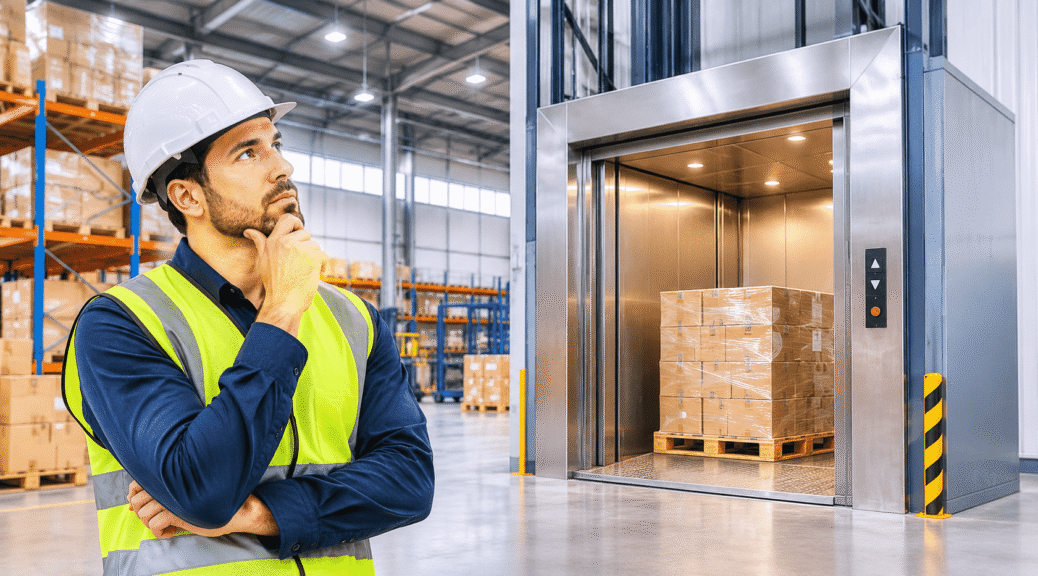
How to Choose the Right Goods Lift Capacity for Warehouses and Factories
Warehouses and factories depend on efficient material movement to maintain smooth operations. From transporting raw materials and finished products to moving machinery, pallets and inventory between floors, vertical material handling plays an important role in industrial productivity.
A goods lift provides a practical solution for moving heavy and bulky materials between different levels of a building. However, selecting the right lift involves more than choosing equipment that can carry a particular weight.
One of the most important decisions is determining the appropriate goods lift capacity.
An undersized lift may create operational bottlenecks, restrict the movement of materials and limit future requirements. An unnecessarily oversized system, on the other hand, may increase initial investment and require additional space or infrastructure.
For warehouse owners, factory managers and logistics operators, the right capacity should be determined by evaluating load weight, pallet dimensions, handling equipment, lifting frequency, building layout and future operational requirements.
In this guide, we explain how to choose the right goods lift capacity for warehouses and factories, what factors influence capacity selection, how platform dimensions affect the decision and what to consider before planning an industrial goods lift installation.
Table of Contents
What Is Goods Lift Capacity?
Goods lift capacity refers to the maximum rated load that an elevator is designed and approved to carry under specified operating conditions.
It is generally expressed in kilograms (kg) or metric tonnes.
For example, a goods lift with a rated capacity of 1,000 kg is designed to carry a maximum permitted load of 1,000 kg, subject to its approved configuration and operating instructions.
The rated capacity is an important technical specification because it determines the weight limit for each lifting cycle.
However, two different considerations must be understood when selecting an industrial goods lift.
Rated Load Capacity
Rated load capacity is the maximum permitted load specified for the lift.
It should account for the complete load being transported, including:
- Raw materials.
- Finished products.
- Machinery and equipment.
- Pallets.
- Trolleys.
- Carts and other handling equipment.
The total load must remain within the lift’s rated capacity.
Goods Lift Capacity vs Platform Size
Capacity and platform size are not the same thing.
A lift may have sufficient weight capacity but insufficient platform dimensions to accommodate a large pallet, trolley or bulky piece of equipment.
Similarly, a large platform does not automatically mean the lift can carry a heavy load.
Both specifications should be evaluated together to ensure the lift can accommodate the intended materials safely and practically.
Why Choosing the Right Goods Lift Capacity Matters
Selecting the correct industrial goods lift capacity can influence material handling, operational efficiency and long-term equipment suitability.
Here are some important reasons to plan capacity carefully.
Safe Material Handling
The primary purpose of capacity planning is to ensure that the goods lift operates within its rated load limits.
Overloading can place additional stress on the lifting system and create unsafe operating conditions.
Selecting an appropriate capacity helps businesses establish clear loading limits for employees and material-handling teams.
The lift should also incorporate suitable safety features, including overload protection and emergency systems, according to its design and applicable requirements.
Efficient Warehouse Operations
Warehouses often handle different types of inventory throughout the day.
A suitable warehouse goods elevator can help move pallets, cartons, packaged materials and other inventory between floors.
If the lift capacity or platform dimensions are inadequate, employees may need to divide loads into smaller batches or arrange additional lifting cycles.
This can increase handling time and affect workflow efficiency.
Reduced Operational Bottlenecks
Factories and warehouses may experience higher material movement during specific operating periods.
For example, a manufacturing facility may need to transport raw materials during production shifts and finished goods during dispatch periods.
A properly selected lift can support the intended load requirements and help reduce unnecessary delays associated with unsuitable equipment.
Better Equipment Utilisation
A goods lift should match the actual requirements of the facility.
Selecting a capacity that is too low may restrict operations, while an unnecessarily high capacity may result in equipment being underutilised.
A detailed assessment helps businesses choose a configuration that balances operational needs, installation requirements and investment.
Long-Term Operational Suitability
Industrial requirements can change over time.
Production volumes may increase, inventory levels may expand and material-handling equipment may change.
Planning for foreseeable future requirements can help businesses avoid selecting a lift that becomes unsuitable shortly after installation.
Key Factors to Consider When Selecting Goods Lift Capacity
Choosing the right goods lift capacity for factories and warehouses requires an assessment of several interconnected factors.
Maximum Load Weight
The first step is identifying the heaviest load that the lift is expected to carry.
Consider:
- Weight of individual products.
- Total weight per lifting cycle.
- Heaviest expected material batch.
- Weight of pallets and packaging.
- Weight of trolleys or carts.
- Weight of other handling equipment.
For example, suppose a warehouse transports packaged goods on a pallet.
| Load Component | Example Weight |
| Packaged goods | 600 kg |
| Pallet | 30 kg |
| Trolley or handling equipment | 70 kg |
| Total load | 700 kg |
In this example, the lift must accommodate a total load of 700 kg, not just the 600 kg of packaged goods.
The final rated capacity should be selected by the lift manufacturer and engineering team after considering the complete operating requirements and applicable safety criteria.
Pallet and Material Dimensions
Weight alone does not determine whether materials can fit inside a goods lift.
The dimensions and arrangement of the load are equally important.
Before selecting a lift, evaluate:
- Standard pallet dimensions.
- Product length and width.
- Maximum load height.
- Loading arrangement.
- Number of pallets per cycle.
- Cabin and door clearance.
- Space required for safe loading and unloading.
For example, a warehouse may transport relatively lightweight but oversized products.
In such cases, a lift with sufficient rated capacity may still be unsuitable if its platform or entrance dimensions are inadequate.
Therefore, goods lift capacity based on pallet size and load should be evaluated as part of the overall selection process.
Type of Material Handling Equipment
The equipment used to move materials can influence both load calculations and platform requirements.
Common examples include:
Hand Pallet Trucks
These are commonly used for moving palletised materials in warehouses and distribution facilities.
Trolleys and Carts
These may be used for transporting cartons, components, finished products and other materials.
Forklifts
Some industrial facilities may require forklift-compatible loading arrangements. This requires careful engineering assessment of vehicle dimensions, axle loads, wheel loads, entry arrangements and operating procedures.
Not every goods lift is designed for forklift entry.
Businesses should discuss the handling equipment with the manufacturer before finalising lift specifications.
Frequency of Lift Usage
The number of lifting cycles can influence the operational requirements of a goods lift.
Consider:
- Number of lifting cycles per hour.
- Daily operating hours.
- Peak material movement periods.
- Number of employees using the lift.
- Expected loading and unloading time.
- Shift patterns.
A warehouse that moves a few pallets each day may have different operating requirements from a distribution centre handling continuous inventory movement.
Capacity selection should therefore be considered alongside lift speed, duty requirements, control systems and overall operational planning.
Building Height and Number of Floors
The building structure also influences goods lift selection.
Important considerations include:
- Number of floors served.
- Floor-to-floor height.
- Total travel distance.
- Shaft dimensions.
- Loading and unloading arrangements.
- Available machine and equipment space.
A factory with multiple production levels may require a different lift configuration from a two-storey warehouse.
The manufacturer should evaluate the building layout and travel requirements before recommending the appropriate system.
Future Expansion
Businesses should avoid selecting a goods lift based only on current average material movement.
Future expansion may involve:
- Increased production capacity.
- Higher inventory volumes.
- Additional warehouse storage.
- Larger pallets.
- New handling equipment.
- Additional operating shifts.
A realistic assessment of future requirements can help businesses select a system that remains suitable as operations grow.
Common Goods Lift Capacity Categories
Goods lifts are available in different load capacities depending on their intended application and engineering configuration.
The following table provides illustrative capacity categories and the types of requirements businesses may evaluate.
| Illustrative Capacity | Typical Consideration |
| 500 kg | Lighter material handling and smaller goods movement |
| 1,000 kg | General goods movement and moderate warehouse loads |
| 2,000 kg | Heavier materials and industrial applications |
| 3,000 kg and above | Heavy-duty material handling and larger industrial loads |
These are examples for understanding capacity selection, not universal recommendations or a fixed product range.
Actual industrial goods lift capacity depends on the weight and dimensions of the load, platform requirements, handling equipment, operating frequency, building conditions and applicable safety standards.
For heavy-duty applications, the complete lift configuration should be evaluated by the manufacturer and qualified engineering professionals.
How to Estimate the Required Goods Lift Capacity
Businesses can follow a structured approach when determining the appropriate capacity for a warehouse or factory.
Step 1: Identify the Heaviest Individual Load
Determine the maximum weight of the materials that may need to be transported.
Do not rely only on average product or inventory weight.
Step 2: Calculate the Maximum Load per Lifting Cycle
Identify how many products, pallets or material units will be transported in one cycle.
For example, if a lifting cycle involves multiple pallets, calculate the combined weight of all the intended goods.
Step 3: Include Pallet and Handling Equipment Weight
Add the weight of:
- Pallets.
- Trolleys.
- Carts.
- Containers.
- Other equipment travelling inside the lift.
The total transported load must include these items.
Step 4: Determine Platform Dimensions
Evaluate the dimensions of the complete load and the equipment used to transport it.
Check cabin length, width, height, door opening and loading clearance.
Step 5: Evaluate Peak Operating Requirements
Understand how frequently the lift will operate and whether material movement increases during particular shifts or dispatch periods.
This helps determine the required duty and operating configuration.
Step 6: Consider Future Operational Needs
Evaluate whether the facility is likely to increase production, storage or material movement.
Where appropriate, discuss a suitable provision for foreseeable expansion.
Step 7: Confirm the Rated Capacity With the Manufacturer
The final capacity should be confirmed through technical assessment.
The manufacturer and engineering team should review the intended loads, platform dimensions, building structure, equipment configuration and applicable requirements before finalising the specifications.
Important: Goods lift capacity should be based on the maximum intended load per lifting cycle, including handling equipment, rather than simply the average daily load.
Goods Lift Capacity vs Platform Size: Why Both Matter
One common mistake in selecting a warehouse goods lift is focusing entirely on weight capacity.
In industrial material handling, platform dimensions can be just as important.
Consider two examples.
Heavy but Compact Loads
A factory may transport compact metal components or machinery parts that weigh several hundred kilograms.
These materials may require a higher rated capacity but relatively limited platform space.
Large but Lightweight Materials
A warehouse may transport bulky cartons, packaging materials or large plastic components.
These materials may weigh relatively little but require a wider and longer platform.
Why Load Distribution Matters
The positioning of goods inside the lift is also important.
Loads should be arranged according to the manufacturer’s loading instructions.
Uneven or concentrated loading can create problems even when the total weight is within the rated capacity.
Therefore, businesses should consider:
- Total load weight.
- Load dimensions.
- Platform dimensions.
- Load distribution.
- Door clearance.
- Loading equipment.
- Safe loading and unloading procedures.
The ideal goods elevator capacity should be selected together with the platform configuration to support the actual material-handling process.
Common Mistakes When Selecting Goods Lift Capacity
Choosing a goods lift without properly assessing operational requirements can lead to avoidable problems.
Here are some mistakes businesses should avoid.
Choosing Capacity Based Only on Average Loads
Average load weight does not represent the maximum load that may be transported.
Capacity planning should account for the heaviest expected lifting cycle.
Ignoring Trolley or Pallet Weight
Pallets, trolleys and handling equipment contribute to the total load.
Ignoring these weights can result in an incorrect capacity assessment.
Selecting an Undersized Platform
A lift may have sufficient load capacity but still be unable to accommodate the required pallet or equipment dimensions.
Platform size and door clearance should be checked before installation.
Overlooking Forklift Requirements
Forklift entry introduces additional technical considerations, including wheel loads, axle loads, vehicle dimensions and loading arrangements.
A lift should not be assumed to be forklift-compatible without specific engineering confirmation.
Ignoring Future Production Expansion
A system selected only for present requirements may become inadequate when production or warehouse activity increases.
Consider realistic future operating requirements during the planning stage.
Choosing a Lift Based Only on Price
The lowest initial quotation may not represent the most suitable long-term solution.
Businesses should compare capacity, platform size, safety features, equipment specifications, installation requirements, warranty and maintenance support.
Overloading the Lift Beyond Rated Capacity
A goods lift must never be operated beyond its approved rated capacity.
Overloading can compromise safe operation and damage equipment.
Employees should be trained to follow the manufacturer’s loading instructions and capacity limits.
How to Choose the Right Goods Lift for Your Warehouse or Factory
Once the capacity requirements are understood, businesses should evaluate the complete lift configuration.
The following factors can help guide the selection process.
Load Capacity
Select a rated capacity that accommodates the maximum intended load, including pallets and handling equipment.
Platform Dimensions
Ensure the platform can accommodate the largest intended load and the required loading arrangement.
Lift Speed
Lift speed should be evaluated according to travel distance, operational frequency and loading cycles.
The objective is to support workflow requirements while maintaining the appropriate operating specifications.
Number of Floors
The number of floors and total travel height influence the lift configuration and installation requirements.
Loading and Unloading Arrangements
Consider whether loading will take place through hand pallet trucks, trolleys, carts or other handling equipment.
Door dimensions and floor-level access should be planned accordingly.
Safety Features
Safety provisions should be appropriate to the lift design and application.
Depending on the configuration, discuss:
- Overload protection.
- Emergency stop systems.
- Safety brakes.
- Door interlocks.
- Emergency alarm.
- Emergency rescue arrangements.
- Appropriate control systems.
Installation Requirements
Evaluate shaft dimensions, structural conditions, electrical requirements and site readiness before finalising the lift design.
Maintenance and Service Support
Industrial goods lifts may operate frequently and under demanding conditions.
Regular maintenance, technical inspections and access to service support are important for long-term performance.
Businesses should discuss preventive maintenance schedules, spare-parts support, breakdown assistance and Annual Maintenance Contracts (AMC) with the manufacturer.
Why Choose Spire Elevators for Industrial Goods Lifts?
Choosing the right industrial goods lift manufacturer involves evaluating more than the equipment’s rated capacity.
Businesses should consider manufacturing capabilities, technical specifications, installation support, customisation and long-term maintenance.
Spire Elevators provides goods lift and freight elevator solutions for warehouses, factories, distribution centres and commercial facilities.
Its goods and freight elevator solutions are designed for transporting materials, machinery and bulky loads in demanding environments.
Goods Lift Solutions for Industrial Applications
Different facilities have different material-handling requirements.
A warehouse transporting palletised inventory may need a different configuration from a factory moving machinery components or heavy production materials.
Spire offers goods lift solutions with considerations such as:
- Heavy-load handling.
- Robust cabin construction.
- Spacious platform configurations.
- Loading and unloading arrangements.
- Safety features.
- Customised lift requirements.
Manufacturing and Installation
Spire Elevators provides elevator manufacturing and installation services.
For industrial projects, proper coordination between lift specifications, building layout and installation requirements is essential.
The company’s team can assess project requirements and discuss a suitable goods lift configuration.
Customised Industrial Lift Solutions
Not every warehouse or factory has the same building dimensions, load requirements or material-handling processes.
Spire’s goods lift solutions can be evaluated according to project-specific requirements, including capacity, cabin dimensions, door arrangements and operating conditions.
Maintenance and Technical Support
A goods lift is an important part of the material-handling infrastructure.
Regular inspection and maintenance can help support safe and reliable operation.
Spire provides lift maintenance, repair and technical support services to support elevator operation beyond installation.
Discuss Your Industrial Goods Lift Requirements
Before selecting a goods lift manufacturer in India, prepare information about your load weight, pallet dimensions, number of floors, building layout and material-handling equipment.
This information can help the manufacturer understand your requirements and recommend an appropriate configuration.
To discuss a warehouse or factory goods lift project, visit Spire Elevators or submit an enquiry.
Frequently Asked Questions
- What goods lift capacity is suitable for a warehouse?
The appropriate capacity depends on the maximum load per lifting cycle, pallet dimensions, handling equipment and operating requirements. Smaller material-handling applications may consider capacities such as 500 kg, while heavier warehouse operations may require 1,000 kg, 2,000 kg or more. The final capacity should be confirmed through technical assessment.
- How do you calculate goods lift capacity?
Start by identifying the maximum intended load per lifting cycle. Add the weight of the goods, pallets, trolleys and handling equipment. Then evaluate platform dimensions, loading arrangements, operating frequency and future requirements. The manufacturer should confirm the final rated capacity.
- What is the difference between goods lift capacity and platform size?
Goods lift capacity refers to the maximum permitted load weight, while platform size refers to the available space inside the lift for accommodating materials and handling equipment. Both specifications must be suitable for the intended application.
- Can a goods lift carry pallets and trolleys?
Yes, a goods lift can be designed for pallet and trolley transportation when its capacity, platform dimensions, door clearance and loading arrangements are suitable. The total weight of the goods and handling equipment must remain within the rated capacity.
- What capacity goods lift is suitable for factories?
Factory requirements vary depending on the type of materials, production processes, equipment and lifting frequency. Some facilities may need 1,000 kg capacity, while heavier industrial operations may require 2,000 kg or several tonnes. A site and load assessment is recommended before selection.
- Should goods lift capacity include trolley weight?
Yes. The total transported load includes the goods, pallet, trolley, cart and other equipment carried inside the lift. All these components must be considered when calculating the required capacity.
- Can goods lift capacity be increased after installation?
Increasing a lift’s rated capacity after installation is not a simple equipment adjustment. It may require significant engineering changes to the lifting system, structure, controls and safety components, along with the necessary approvals and testing. Any proposed change must be evaluated by the manufacturer and qualified professionals. Never increase the permitted load without formal approval.
Conclusion
Choosing the right goods lift capacity is an important decision for warehouses, factories and industrial facilities.
The correct selection depends on more than the maximum weight of individual products. Businesses must also evaluate pallet dimensions, handling equipment, load distribution, lifting frequency, building height and future operational requirements.
A properly planned goods lift can support efficient material movement, reduce unnecessary handling delays and provide a suitable vertical transportation solution for industrial operations.
Before finalising a factory goods lift or warehouse installation, evaluate both rated load capacity and platform dimensions. Also consider safety provisions, installation requirements and long-term maintenance support.
For businesses planning an industrial material-handling project, working with an experienced industrial goods lift manufacturer can help ensure that the selected system aligns with the facility’s actual operational needs.
Spire Elevators provides goods and freight elevator solutions supported by manufacturing, installation, customisation and technical services. Contact Spire Elevators to discuss the right goods lift configuration for your warehouse or factory.