
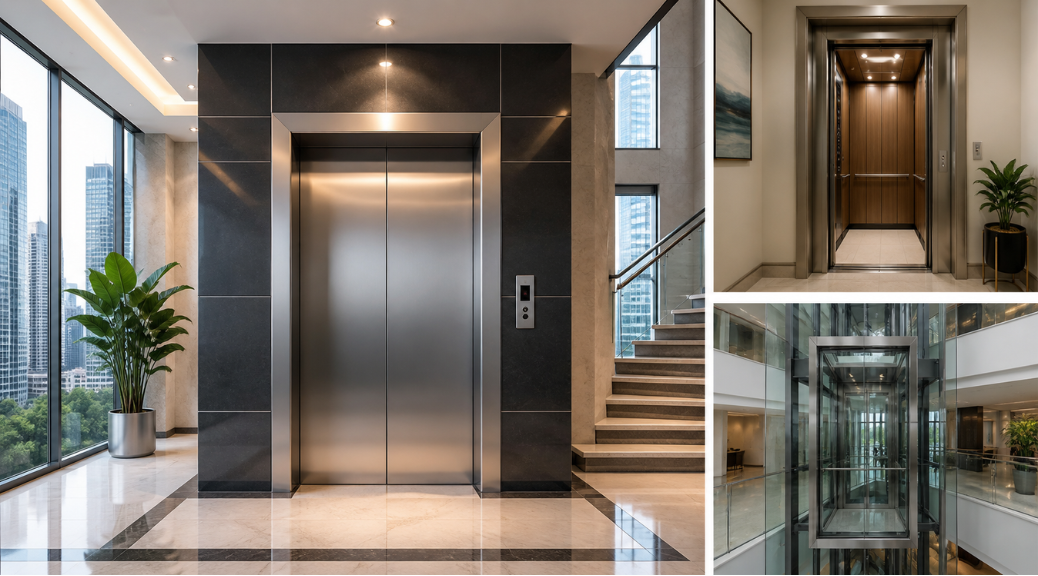
Passenger Elevators in India: A Complete Guide for Modern Homes and Commercial Buildings
As buildings in India continue to grow taller and urban spaces become more densely developed, elevators have become an essential part of modern architecture.
From residential apartments and independent homes to office buildings, hotels, hospitals and shopping complexes, passenger elevators make vertical movement faster, safer and more convenient.
But choosing a passenger elevator is not simply about selecting a lift with the right number of floors. Factors such as building type, passenger traffic, capacity, speed, shaft dimensions, energy efficiency, safety systems, accessibility, cabin design and long-term maintenance all influence the right solution.
For homeowners, builders, architects and commercial property developers, understanding these factors before installation can help avoid costly mistakes and ensure reliable long-term performance.
This guide explains passenger elevators in India, how they work, the different types available, their applications, important features, installation considerations, maintenance requirements and how to choose the right passenger lift for a modern building.
Table of Contents
What Is a Passenger Elevator?
A passenger elevator is a vertical transportation system designed primarily to move people between different floors of a building.
Unlike goods elevators, which are designed mainly for transporting materials, passenger elevators prioritize:
- Passenger safety
- Smooth movement
- Comfortable travel
- Accurate floor leveling
- Convenient access
- Reliable operation
- Efficient traffic handling
- Cabin aesthetics
Passenger elevators are commonly installed in:
- Residential apartments
- Independent homes
- Commercial buildings
- Corporate offices
- Hotels
- Shopping malls
- Hospitals
- Educational institutions
- High-rise buildings
- Mixed-use developments
Spire Elevators describes its passenger elevators as solutions for residential, commercial and high-rise buildings, with emphasis on safe and smooth transportation, accurate floor leveling and reliable performance during periods of higher usage.
Why Are Passenger Elevators Important in Modern Buildings?
In a multi-storey building, stairs alone are often not enough to provide convenient vertical mobility.
Elevators improve accessibility while reducing the physical effort required to move between floors.
Passenger elevators are important because they provide:
Convenient vertical transportation
People can travel between floors quickly without using stairs.
Improved accessibility
Elevators can support elderly users, people with mobility limitations and families with children or luggage.
Better building functionality
An efficient lift system can improve movement within apartments, offices, hotels and other facilities.
Higher user comfort
Modern elevators can provide smooth acceleration, controlled stopping and quieter operation.
Improved property usability
A reliable elevator can make upper floors more practical and accessible.
Better traffic management
In busy buildings, properly planned elevators help manage passenger movement during peak periods.
How Does a Passenger Elevator Work?
A modern passenger elevator generally consists of a cabin that travels vertically inside a shaft.
Depending on the elevator design, the system may use technologies such as:
- Traction drive
- Machine-room-less systems
- Geared or gearless arrangements
- Hydraulic technology for certain applications
A typical passenger elevator includes:
- Elevator cabin
- Guide rails
- Drive system
- Motor
- Controller
- Landing doors
- Car doors
- Safety equipment
- Control panel
- Position sensors
- Floor-leveling system
- Emergency systems
When a passenger selects a floor, the control system processes the request and activates the drive system. The cabin moves along guide rails and stops at the selected floor with controlled leveling.
Modern systems can also incorporate intelligent controls and dispatch technologies to improve traffic handling and reduce unnecessary waiting.
Types of Passenger Elevators in India
Passenger elevators are not a one-size-fits-all solution.
Different buildings require different elevator configurations.
1. Traction Passenger Elevators
Traction elevators use a motor-driven system to move the elevator through the shaft.
They are widely used for residential and commercial buildings and can be suitable for applications requiring efficient vertical transportation.
Spire’s passenger elevator offering highlights advanced traction systems for smooth and low-vibration movement.
Suitable for:
- Apartment buildings
- Commercial offices
- Hotels
- High-rise buildings
- Mixed-use developments
2. Machine Room Less Passenger Elevators
A Machine Room Less (MRL) elevator is designed without a traditional separate machine room.
The machinery is integrated into the shaft arrangement, allowing the building design to use space more efficiently.
Potential advantages include:
- Space-efficient planning
- Reduced requirement for a separate machine room
- Modern architectural integration
- Suitable for many residential and commercial projects
The suitability of an MRL configuration depends on the building structure, travel height, capacity and project requirements.
3. Hydraulic Passenger Elevators
Hydraulic systems use hydraulic power to move the elevator cabin.
They can be considered for specific low-rise applications where the building and site conditions support hydraulic installation.
Hydraulic technology is also used by Spire in residential lift applications, where the company highlights smooth movement, compact installation possibilities and emergency lowering systems.
For larger commercial buildings, however, the appropriate technology should be determined through professional engineering evaluation.
4. Gearless Passenger Elevators
Gearless traction systems can be suitable for buildings where higher performance, efficient operation and greater travel requirements are important.
They are commonly considered for:
- High-rise buildings
- Premium commercial properties
- Large residential towers
- Hotels
The final selection depends on the building’s height, traffic demand, capacity and design requirements.
5. Capsule Passenger Elevators
Capsule elevators combine passenger transportation with distinctive architectural design.
They often feature glass elements and visually prominent cabins.
They can be particularly attractive for:
- Hotels
- Shopping complexes
- Commercial buildings
- Luxury residences
- Architectural landmarks
Spire offers capsule elevators as part of its wider elevator portfolio.
Passenger Elevator vs. Home Elevator
One common question is whether a passenger elevator and home elevator are the same.
They serve similar basic purposes but are generally designed for different usage environments.
| Factor | Passenger Elevator | Home Elevator |
| Primary application | Residential/commercial buildings | Private homes |
| Usage | Moderate to high | Usually lower |
| Capacity | Often higher | Usually smaller |
| Traffic requirements | Higher | Lower |
| Speed | Project dependent | Generally suited to residential movement |
| Cabin design | Functional + architectural | Often highly customized |
| Installation | Building-specific | Designed for residential conditions |
For a large apartment building, a passenger elevator is generally more appropriate.
For a private villa or duplex, a dedicated home lift may provide a better fit.
What Capacity Should a Passenger Elevator Have?
Elevator capacity should be determined according to the building’s expected passenger traffic.
Capacity may vary based on:
- Building type
- Number of occupants
- Number of floors
- Floor area
- Peak traffic
- Elevator speed
- Number of elevators
- Waiting time expectations
- Building usage
Spire’s passenger elevator FAQ states that typical passenger elevator capacities can range from approximately 4 to 20 passengers, depending on the design.
However, capacity should not be selected in isolation.
A high-occupancy office building may require a different elevator strategy than a small residential building even if both have the same number of floors.
How Many Passenger Elevators Does a Building Need?
The number of elevators required depends on more than the building’s height.
Important factors include:
- Number of floors
- Total population
- Floor area
- Peak traffic periods
- Building type
- Passenger capacity
- Elevator speed
- Average waiting time
- Travel time
- Special transportation requirements
For example:
Residential Building
Passenger traffic is often concentrated around:
- Morning hours
- Evening return periods
- School/work commuting times
Office Building
Peak traffic may occur around:
- Start of working hours
- Lunch periods
- End of working hours
Hotel
Traffic can be more distributed throughout the day.
Hospital
Traffic requirements can be highly specialized because passenger movement may overlap with patient and medical-equipment transportation.
This is why elevator planning should be completed during the building design stage.
Key Features of Modern Passenger Elevators
Modern passenger elevators are designed to provide more than basic vertical transportation.
1. Smooth and Quiet Operation
Advanced drive systems can help reduce vibration and noise.
Spire highlights smooth, low-vibration and quiet movement as a feature of its passenger elevator systems.
2. Accurate Floor Leveling
The elevator should stop accurately at each landing to provide a safe transition between the cabin and floor.
3. Automatic Rescue Device
An Automatic Rescue Device (ARD) can help move the elevator to a suitable landing during certain power failures.
Spire’s passenger elevator page specifically lists ARD systems among its safety features.
4. Overload Protection
The system can detect excessive loads and prevent unsafe operation.
5. Emergency Braking
Emergency braking systems provide an additional layer of protection.
6. Door Sensors
Sensors can help detect obstructions and prevent unsafe door closing.
7. Intelligent Controls
Modern control systems can improve floor management and passenger flow.
8. Energy-Efficient Drives
VVVF technology and other energy-saving components can help reduce energy consumption.
Spire highlights VVVF drives and energy-efficient components in its passenger elevator offering.
Passenger Elevator Safety Features
Safety is the most important consideration when selecting an elevator.
A modern passenger elevator may include multiple safety mechanisms.
Important systems can include:
- Overload protection
- Emergency brakes
- Door interlocks
- Door sensors
- Emergency alarm
- Automatic rescue device
- Safety brakes
- Floor-leveling controls
- Emergency lighting
- Communication systems
- Speed monitoring
- Position sensors
The exact safety configuration varies by elevator model and installation.
Elevator safety should also include professional installation, commissioning and periodic maintenance.
Spire states that its passenger elevators incorporate features including overload protection, emergency brakes, ARD systems and precise leveling technology.
Energy Efficiency in Passenger Elevators
Energy efficiency has become increasingly important for modern buildings.
Elevators operate repeatedly throughout the day, so the efficiency of their drive system and control strategy can influence long-term operating costs.
Modern elevator systems may use:
- VVVF drives
- Energy-efficient motors
- Intelligent controls
- Efficient lighting
- LED cabin lighting
- Standby modes
- Regenerative technology in suitable applications
However, elevator energy consumption depends on several factors, including:
- Number of trips
- Load
- Travel distance
- Building height
- Elevator speed
- Traffic pattern
- Drive technology
Therefore, energy efficiency should be evaluated as part of the complete building system rather than based on one component alone.
Passenger Elevator Cabin Design
Elevators have evolved from purely functional equipment into part of the building’s interior design.
Modern passenger elevator cabins can be customized through:
- Stainless steel finishes
- Glass elements
- Decorative panels
- LED lighting
- Ceiling designs
- Handrails
- Flooring
- Control panels
- Digital displays
- Custom wall finishes
This is especially important in:
- Luxury residences
- Hotels
- Corporate offices
- Retail buildings
- Premium apartment projects
A well-designed elevator cabin can complement the architecture instead of appearing as a separate mechanical element.
Spire states that its passenger elevators are available with customizable finishes and modern cabin interiors.
Passenger Elevators for Modern Homes
Passenger elevators are commonly associated with apartment buildings and commercial properties, but residential projects can also require larger passenger lift systems.
They may be appropriate for:
- Multi-family residential buildings
- Apartment complexes
- Luxury residential towers
- Builder floors
- Large residential developments
- Multi-storey housing projects
For a single private home, however, a home elevator may be more appropriate depending on passenger capacity and usage requirements.
The key is to match the elevator to the building’s actual transportation needs.
Passenger Elevators for Commercial Buildings
Commercial buildings often have significantly higher passenger traffic than residential properties.
Passenger elevators are commonly used in:
Office Buildings
Employees may arrive and leave within concentrated periods, creating significant peak traffic.
Hotels
Guests require convenient access throughout the day.
Shopping Centres
Passenger movement is distributed across multiple floors.
Corporate Buildings
Fast and reliable transportation can improve the daily user experience.
Educational Buildings
Students, faculty and staff may require efficient vertical access.
For commercial projects, elevator traffic planning should be completed early so that capacity and speed can be optimized.
Passenger Elevators for High-Rise Buildings
High-rise buildings create additional elevator challenges.
As building height increases, elevator planning becomes more complex.
Important factors include:
- Higher travel distances
- Higher speed requirements
- Longer travel times
- Increased passenger traffic
- Building population
- Zoning
- Waiting times
- Number of elevators
- Energy consumption
High-rise projects may require multiple elevator groups or specialized traffic-management strategies.
An experienced elevator manufacturer can help architects and developers evaluate these requirements before construction.
How to Choose the Right Passenger Elevator
Selecting the right elevator requires more than comparing prices.
Consider these factors carefully.
1. Building Type
Determine whether the lift is for:
- Residential
- Commercial
- Hotel
- Hospital
- Retail
- Institutional
- High-rise
2. Passenger Capacity
Estimate the maximum expected passenger demand.
3. Number of Floors
The number of stops and total travel height affect elevator selection.
4. Speed
Higher buildings may require higher elevator speeds.
5. Shaft Dimensions
The available shaft space determines what type of elevator can be installed.
6. Door Configuration
Door type and width should match the building’s traffic and accessibility requirements.
7. Drive Technology
Evaluate traction, MRL, hydraulic or other suitable configurations.
8. Cabin Design
Consider the architectural style of the building.
9. Energy Efficiency
Compare the complete operating profile rather than focusing only on the motor.
10. Safety Systems
Ensure appropriate safety systems are incorporated into the design.
11. Maintenance Support
Ask about:
- Preventive maintenance
- AMC
- Spare parts
- Service response
- Technical support
- Inspection schedules
12. Manufacturer Experience
The elevator company should have the technical capability to handle design, manufacturing, installation and after-sales support.
Passenger Elevator Installation Process
A professional passenger elevator installation generally follows several stages.
Step 1: Site Survey
The elevator company evaluates:
- Shaft
- Pit
- Headroom
- Floor heights
- Structural conditions
- Electrical requirements
- Access
- Building usage
Step 2: Requirement Assessment
The team determines:
- Capacity
- Speed
- Number of stops
- Door configuration
- Drive system
- Cabin size
- Finish
Step 3: Engineering and Design
The elevator is designed according to the building’s technical requirements.
Step 4: Civil Preparation
The site may require:
- Shaft construction
- Pit work
- Landing preparation
- Structural modifications
- Electrical provisions
Step 5: Manufacturing
Elevator components are manufactured according to the approved specifications.
Step 6: Installation
The equipment, cabin, doors, controls, drive system and safety components are installed.
Step 7: Testing and Commissioning
The complete system is tested before being placed into regular operation.
Installation timelines vary according to the building, elevator type, customization, site readiness and project complexity. Spire notes that installation generally takes a few weeks, although the exact duration depends on the structure and elevator configuration.
Passenger Elevator Maintenance
Installing an elevator is only the beginning of its lifecycle.
Regular maintenance is important for:
- Safety
- Reliability
- Smooth operation
- Reduced breakdowns
- Longer equipment life
- Consistent performance
Maintenance may include inspection of:
- Drive system
- Motor
- Door mechanism
- Door sensors
- Safety brakes
- Guide components
- Electrical connections
- Controller
- Emergency systems
- Cabin controls
- Leveling system
Spire recommends regular maintenance and states that servicing every 3–6 months is generally recommended, while actual maintenance requirements should follow the elevator model, usage and applicable requirements.
For commercial buildings with high usage, a structured Annual Maintenance Contract (AMC) can provide ongoing technical support.
Common Passenger Elevator Problems
Even a properly maintained elevator can eventually experience operational issues.
Common warning signs include:
- Unusual sounds
- Jerky movement
- Slow doors
- Door reopening repeatedly
- Incorrect floor leveling
- Frequent stoppages
- Unusual vibration
- Display errors
- Longer waiting times
- Unusual smells
- Sudden changes in ride quality
These signs should not be ignored.
Building owners should contact a qualified elevator service professional rather than attempting to bypass safety mechanisms or perform unauthorized repairs.
Passenger Elevator vs. Goods Elevator
Passenger and goods elevators serve different purposes.
| Feature | Passenger Elevator | Goods Elevator |
| Primary use | People | Goods/materials |
| Cabin design | Passenger comfort | Heavy-duty transportation |
| Ride quality | Smooth passenger movement | Designed around load handling |
| Capacity | Passenger-focused | Load-focused |
| Typical locations | Homes, offices, hotels | Warehouses, factories, commercial facilities |
| Interior | Aesthetic + comfortable | Durable + functional |
Choosing the wrong elevator type can lead to performance and operational problems.
Passenger Elevator vs. Automobile Elevator
These two elevator categories are also fundamentally different.
| Feature | Passenger Elevator | Automobile Elevator |
| Main purpose | Transport people | Transport vehicles |
| Platform/cabin | Passenger cabin | Vehicle platform/cabin |
| Load design | Passenger load | Vehicle load |
| Dimensions | Human-access focused | Vehicle dimensions |
| Safety design | Passenger transportation | Vehicle transportation |
| Applications | Residential/commercial | Parking, villas, showrooms, commercial buildings |
An automobile elevator should be selected when the primary objective is moving vehicles between levels.
How Much Does a Passenger Elevator Cost in India?
There is no universal price for a passenger elevator.
The final cost can vary significantly based on:
- Elevator capacity
- Number of floors
- Speed
- Drive technology
- Shaft dimensions
- Cabin size
- Door configuration
- Interior finishes
- Installation complexity
- Civil work
- Safety features
- Customization
- Site conditions
- Maintenance requirements
For this reason, publishing a single passenger elevator price without knowing the project requirements can be misleading.
The best approach is to request a site assessment and customized quotation.
A professional quotation should ideally clarify what is included in:
- Equipment
- Installation
- Civil work
- Electrical work
- Testing
- Commissioning
- Warranty
- AMC
- Additional customization
Why Choose Spire Elevators for Passenger Elevators?
Spire Elevators is an elevator manufacturing company based in Delhi NCR offering passenger elevators for residential, commercial and high-rise applications. Its broader portfolio includes home elevators, capsule elevators, goods lifts, automobile elevators and hospital elevators.
The company highlights:
- Passenger elevator solutions
- Advanced traction technology
- Safety systems
- Energy-efficient drives
- Custom cabin designs
- Intelligent controls
- Installation services
- Technical support
- Maintenance and AMC
Spire states that it was founded in 2008 and currently highlights 15+ years of experience, 2,500+ satisfied clients, 150+ team members and 2,000+ delivered projects.
Its passenger elevator solutions are designed to combine safety, performance, comfort and architectural customization, making them suitable for different residential and commercial requirements.
What Makes a Good Passenger Elevator Manufacturer?
Before selecting an elevator company, evaluate more than the product brochure.
A reliable manufacturer or supplier should be able to support the project through its complete lifecycle.
Look for:
Engineering expertise
The company should understand structural and technical requirements.
Quality manufacturing
Components should be manufactured and assembled with appropriate quality controls.
Professional installation
Installation affects safety and long-term performance.
Customization
The manufacturer should be able to adapt the elevator to the building.
Safety focus
Safety should be integrated into the complete design.
After-sales support
Service should continue after installation.
Maintenance capability
AMC and preventive maintenance can help keep the elevator operational.
Local service availability
For projects in Delhi NCR and nearby regions, local technical support can be an important consideration.
Passenger Elevator Trends in Modern Buildings
Passenger elevators are becoming increasingly integrated with the architecture and technology of modern buildings.
Some notable trends include:
Smart Elevator Controls
Intelligent control systems can improve passenger flow and reduce unnecessary waiting.
Energy-Efficient Systems
Energy-efficient motors and drive technologies are becoming increasingly important.
Touchless Controls
Some buildings are exploring touchless or destination-based control systems.
Modern Cabin Interiors
Elevator cabins are increasingly designed as part of the building’s interior concept.
Glass and Premium Finishes
Luxury buildings are using glass, stainless steel and customized finishes to create distinctive elevator interiors.
Accessibility-Focused Design
Modern buildings increasingly need to consider accessibility from the planning stage.
Final Checklist Before Installing a Passenger Elevator
Before finalizing your elevator, ask:
- What type of building is it?
- How many people will use the elevator?
- How many floors need to be connected?
- What capacity is required?
- What speed is appropriate?
- What shaft space is available?
- Is an MRL or conventional configuration suitable?
- What safety features are included?
- What cabin finish is required?
- What are the energy requirements?
- What maintenance plan will be used?
- Is AMC available?
- Who will handle installation?
- What warranty is provided?
- Is local technical support available?
Getting clear answers to these questions can make the selection process significantly easier.
Conclusion
A passenger elevator is one of the most important systems in a modern multi-storey building.
The right elevator can improve accessibility, convenience, safety, passenger comfort and building functionality, while the wrong system can create unnecessary operating costs and maintenance challenges.
When choosing a passenger elevator in India, consider the complete picture:
Building type + passenger traffic + capacity + speed + technology + safety + design + energy efficiency + maintenance.
For residential apartments, commercial buildings and high-rise developments, professional elevator planning is essential from the early design stage.
If you are planning a new passenger elevator or replacing an existing lift, work with an experienced elevator company that can evaluate your site, recommend the appropriate technology and provide installation and long-term maintenance support.
Looking for passenger elevators in Delhi NCR? Spire Elevators provides passenger lift solutions for residential, commercial and high-rise buildings, with customizable designs, safety-focused engineering, installation and after-sales support.
Frequently Asked Questions About Passenger Elevators
What is a passenger elevator?
A passenger elevator is a lift designed primarily to transport people safely and efficiently between different floors.
Where are passenger elevators used?
Passenger elevators are commonly installed in apartments, offices, hotels, hospitals, shopping complexes, high-rise buildings and other multi-storey properties.
What is the typical capacity of a passenger elevator?
Capacity varies according to the building and elevator design. Passenger elevators can range from small systems for limited users to much larger systems for high-traffic commercial and high-rise buildings. Spire lists typical capacities ranging from 4 to 20 passengers for its passenger elevator category.
Are passenger elevators energy efficient?
Modern passenger elevators can use energy-efficient drive systems such as VVVF technology and other energy-saving components. Actual energy consumption depends on usage, building height, speed, load and system configuration.
Are passenger elevators safe?
Modern passenger elevators can incorporate multiple safety systems including overload protection, emergency brakes, door interlocks, ARD and accurate floor-leveling technology. Professional installation and regular maintenance are also essential.
Can passenger elevators be customized?
Yes. Depending on the manufacturer and project, passenger elevators can be customized in terms of cabin size, capacity, speed, finishes, lighting, control systems and other specifications.
What is an MRL passenger elevator?
A Machine Room Less passenger elevator is designed without a conventional separate machine room, allowing the machinery to be integrated into the shaft arrangement.
Are passenger elevators suitable for homes?
They can be suitable for multi-family buildings, apartments and larger residential developments. For private villas and smaller homes, a dedicated home elevator may be more appropriate.
How often should passenger elevators be maintained?
Maintenance should follow the manufacturer’s recommendations, usage conditions and applicable requirements. Spire states that regular servicing is recommended, with its website generally referring to a 3–6 month interval.
How long does passenger elevator installation take?
Installation time depends on the elevator type, building structure, customization and site readiness. Spire states that installation generally takes a few weeks, although actual project timelines vary.