
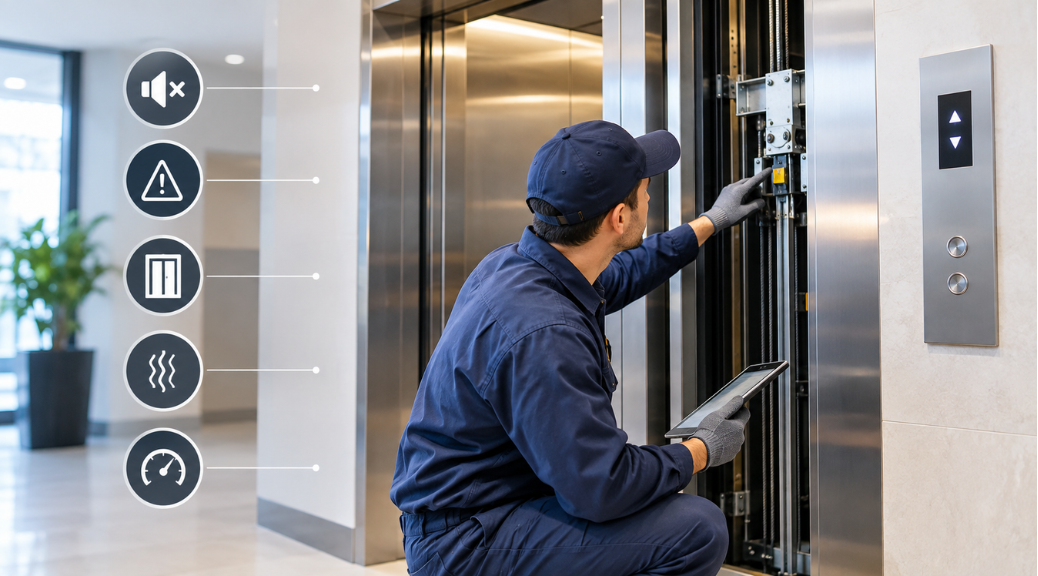
Elevator Troubleshooting: How to Spot Lift Problems Before They Become Major Issues
An elevator is one of the most frequently used systems in many residential and commercial buildings. When it operates smoothly, passengers rarely think about the complex mechanical, electrical and control systems working behind the scenes.
But when an elevator starts making unusual sounds, stopping unevenly, opening its doors slowly or experiencing frequent breakdowns, these can be early warning signs of a developing problem.
Ignoring these signs can lead to more serious equipment issues, unexpected downtime, expensive repairs and, in some cases, safety concerns.
That is why understanding basic elevator troubleshooting can help building owners, facility managers and property managers identify potential problems early and arrange professional inspection before a minor issue becomes a major one.
This guide explains the most common elevator warning signs, what they may indicate, when professional service is required and how preventive maintenance can help keep lifts reliable.
Elevator systems contain high-voltage electrical equipment, moving mechanical components and safety-critical devices. Building owners and users should not attempt to repair or bypass elevator safety systems themselves. Troubleshooting at the user level should be limited to identifying symptoms and reporting them to a qualified elevator service professional.
Table of Contents
Why Early Elevator Troubleshooting Matters
Elevator problems do not always appear suddenly.
In many cases, a lift provides warning signs before a significant failure occurs.
For example:
- The elevator may begin making unusual noises.
- The doors may become slower.
- The cabin may stop slightly above or below floor level.
- The lift may shake during movement.
- Buttons may respond inconsistently.
- The elevator may experience repeated shutdowns.
- The doors may reopen unexpectedly.
These symptoms do not necessarily identify a specific failed component. Several different issues can produce similar symptoms.
However, they are valuable warning signals that the elevator should be inspected.
Early intervention can help:
- Reduce unexpected breakdowns
- Improve passenger safety
- Minimize downtime
- Prevent secondary component damage
- Improve ride quality
- Extend equipment life
- Control maintenance costs
10 Common Elevator Problems You Should Never Ignore
1. Unusual Elevator Noises
A lift should not suddenly develop loud or unusual sounds.
Pay attention to:
- Grinding
- Scraping
- Clicking
- Squealing
- Excessive humming
- Repeated knocking
- Vibrations accompanied by noise
The source could vary depending on the elevator design.
Potential areas requiring inspection may include:
- Door mechanisms
- Bearings
- Motors
- Sheaves
- Guide systems
- Braking components
- Fans
- Mechanical connections
Do not assume that a noise is harmless simply because the elevator continues operating.
A new or worsening sound should be reported to the elevator maintenance provider.
2. Elevator Shaking or Jerky Movement
Passengers should generally experience smooth acceleration, travel and deceleration.
If an elevator suddenly begins to:
- Shake
- Jerk
- Vibrate
- Accelerate unevenly
- Decelerate abruptly
it should be professionally inspected.
Possible causes can vary from mechanical wear and alignment issues to control-system or drive-related problems.
The exact cause cannot be determined simply from the symptom.
This is why professional elevator troubleshooting is important.
3. Incorrect Floor Leveling
Floor leveling refers to how accurately the elevator cabin aligns with the landing floor when it stops.
If passengers regularly notice that the cabin stops noticeably above or below the floor level, this should not be ignored.
Poor leveling can create a trip hazard, particularly for:
- Elderly passengers
- People with mobility challenges
- Children
- Wheelchair users
- People carrying goods
Leveling problems may involve sensors, controls, drive systems, mechanical components or other factors depending on the elevator design.
A qualified technician should diagnose the cause.
4. Elevator Doors Are Slow or Noisy
Elevator doors are among the most frequently operated components of a lift.
Warning signs include:
- Doors opening slowly
- Doors closing slowly
- Doors making unusual noises
- Doors repeatedly reopening
- Doors failing to close properly
- Doors stopping unexpectedly
- Uneven door movement
Because doors are part of the elevator’s safety system, unusual door behavior should receive prompt attention.
Do not force the doors closed or attempt to manually adjust the mechanism.
5. Frequent Elevator Stoppages
Occasional service interruptions may occur, but repeated unexplained stoppages are a warning sign.
A lift that frequently:
- Stops between floors
- Goes out of service
- Requires resetting
- Stops responding to calls
- Returns to service and fails again
should be investigated.
Repeated resets may temporarily restore operation without resolving the underlying problem.
A recurring fault should therefore be diagnosed rather than repeatedly reset.
6. Elevator Buttons Are Not Responding Properly
Another common warning sign is inconsistent response from:
- Floor buttons
- Door-open buttons
- Door-close buttons
- Alarm buttons
- Call buttons
- Display controls
Possible causes can include electrical, control-panel, wiring or communication problems.
Because some buttons—including emergency controls—have safety implications, any malfunction should be reported immediately.
7. Unusual Cabin Vibrations
Some vibration can occur depending on the elevator type, building structure and operating conditions.
However, a sudden increase in vibration should be investigated.
Look for vibration that occurs:
- During acceleration
- During normal travel
- During deceleration
- When the doors operate
- Only at certain floors
Keeping track of when the vibration occurs can help technicians diagnose the problem more efficiently.
8. Elevator Display or Error Codes
Modern elevators may use electronic control systems that display fault codes or diagnostic messages.
If an elevator displays:
- Error codes
- Warning messages
- Service-required messages
- Repeated fault indicators
the building manager should record the information and contact the maintenance provider.
Do not attempt to clear a recurring fault simply to return the elevator to operation.
The fault code can provide valuable information to a trained technician.
9. Unusual Smells or Heat
A strong burning smell, unusual electrical odor or excessive heat around elevator equipment should be treated seriously.
Possible sources may include electrical components, motors or other equipment.
If there is a suspected electrical or fire-related issue, the elevator should be taken out of service according to the building’s emergency procedures and qualified professionals should be contacted.
Passengers should never investigate elevator machinery themselves.
10. Water Leakage Around the Elevator
Water and elevator equipment can be a dangerous combination.
Watch for:
- Water entering the lift pit
- Moisture around equipment
- Leaks near the shaft
- Water accumulation near electrical components
- Dampness around machine-room equipment
Water ingress should be addressed promptly.
The source of the water should also be identified rather than simply removing the visible water.
Elevator Troubleshooting: A Simple Symptom Guide
| Elevator Symptom | Possible Area to Investigate | Recommended Action |
| Unusual grinding noise | Mechanical components | Arrange professional inspection |
| Jerky movement | Drive/control/mechanical systems | Stop repeated use and report |
| Poor floor leveling | Sensors/control/drive systems | Request technician inspection |
| Slow doors | Door operator/mechanical system | Schedule service |
| Doors repeatedly reopen | Door sensors/control system | Report promptly |
| Frequent shutdowns | Electrical/control/safety system | Professional diagnosis required |
| Fault code | Control/monitoring system | Record code and contact service provider |
| Burning smell | Electrical/mechanical equipment | Follow emergency procedure and seek professional help |
| Water in pit | Drainage/water ingress | Address immediately |
| Unusual vibration | Mechanical/drive/alignment factors | Arrange inspection |
These are general symptom categories, not diagnoses. The same symptom can have multiple causes.
What Can Cause Elevator Problems?
Elevators combine multiple systems, and a fault in one area can affect overall operation.
Mechanical Components
These may include:
- Motors
- Brakes
- Sheaves
- Bearings
- Guide components
- Door mechanisms
- Suspension components
Mechanical wear can develop gradually through normal operation.
Electrical Systems
Elevators rely on electrical equipment for:
- Power
- Motors
- Lighting
- Controls
- Door operation
- Safety systems
- Communication
Electrical problems can sometimes cause intermittent faults that are difficult to identify without proper testing.
Control Systems
Modern elevators use sophisticated controllers to manage:
- Starting
- Stopping
- Speed
- Door operation
- Floor selection
- Safety monitoring
- Fault detection
Control-system issues can produce symptoms such as inconsistent operation, unexpected stops or error messages.
Sensors and Safety Devices
Elevators rely on sensors and safety devices to monitor operating conditions.
These can include:
- Door sensors
- Position sensors
- Limit devices
- Speed monitoring
- Safety circuits
Never bypass or disable an elevator safety device to keep the lift running.
Elevator Problems That Require Immediate Attention
Some situations should not be treated as routine maintenance issues.
Contact your elevator service provider promptly if you notice:
The elevator stops between floors
Do not attempt to force the doors open.
Passengers should use the emergency communication system and follow the building’s emergency procedures.
The doors do not close correctly
The elevator should be inspected before continued operation if the door issue compromises safe operation.
The elevator moves unexpectedly
This requires immediate professional attention.
There is a burning smell
Treat it as a potential electrical or mechanical issue and follow emergency procedures.
There is significant water inside the shaft or pit
Water can damage equipment and create serious electrical and safety risks.
The elevator repeatedly fails
Repeated resetting should not replace professional diagnosis.
What Should Building Owners Do When an Elevator Develops a Problem?
A simple response process can help prevent escalation.
Step 1: Identify the Symptom
Record what happened.
For example:
- “The lift is making a grinding noise.”
- “It stops approximately 1–2 cm above the floor.”
- “The doors reopen repeatedly.”
- “The display shows an error code.”
Specific observations are more useful than simply reporting “the lift isn’t working.”
Step 2: Record When It Happens
Note whether the issue occurs:
- During morning traffic
- At specific floors
- During acceleration
- During door operation
- Under heavy passenger loads
- Intermittently
Step 3: Take the Elevator Out of Service If Necessary
If the elevator is behaving abnormally or presenting a potential safety concern, follow the building’s elevator emergency/service procedure.
Step 4: Contact a Qualified Elevator Professional
Do not attempt to repair the elevator yourself.
Step 5: Share the Symptoms
Provide the technician with:
- Error codes
- Time of occurrence
- Floor location
- Type of noise
- Frequency of the problem
- Any recent maintenance information
This can help speed up diagnosis.
Preventive Maintenance: The Best Elevator Troubleshooting Strategy
The best way to deal with elevator problems is often to identify them before they become failures.
Preventive maintenance involves planned inspections, servicing and testing according to the elevator manufacturer’s requirements, applicable regulations and the equipment’s operating conditions.
Maintenance may include inspection of:
- Door systems
- Motors
- Brakes
- Electrical connections
- Controllers
- Safety devices
- Guide systems
- Cabin components
- Shaft components
- Pit equipment
- Machine-room equipment
- Communication systems
The exact maintenance requirements vary according to elevator type, design, age, usage and manufacturer specifications.
Why Regular Elevator Maintenance Matters
A properly maintained elevator can provide several benefits.
Improved Reliability
Regular inspections can help identify developing issues before they result in unexpected downtime.
Better Ride Quality
Maintenance can help preserve smooth starting, stopping and door operation.
Reduced Unexpected Repairs
Identifying worn or deteriorating components early may reduce the likelihood of larger failures.
Longer Equipment Life
Proper maintenance can help protect mechanical and electrical components from avoidable deterioration.
Improved Safety
Routine inspection and testing help ensure that safety-related systems continue to function as intended.
Better Passenger Experience
A lift that operates smoothly and reliably contributes to a better experience for residents, employees, customers and visitors.
Elevator Maintenance Checklist for Building Managers
A building manager can use the following checklist when coordinating elevator maintenance:
| Maintenance Area | What to Monitor |
| Cabin | Unusual noise, vibration or damage |
| Doors | Smooth opening/closing and unusual noise |
| Floor leveling | Consistent landing alignment |
| Controls | Buttons and displays functioning properly |
| Lighting | Cabin and emergency lighting |
| Alarm | Emergency communication system |
| Ride quality | Smooth acceleration and deceleration |
| Shaft | Signs of water ingress or unusual conditions |
| Pit | Cleanliness, moisture and equipment condition |
| Machine room | Equipment condition and unusual noise |
| Safety systems | Inspection and testing by qualified personnel |
| Documentation | Maintenance records and service history |
This checklist is for observation and maintenance coordination, not for DIY elevator servicing.
How Often Should an Elevator Be Serviced?
There is no single maintenance interval that applies to every elevator.
Service requirements depend on:
- Elevator type
- Manufacturer
- Age
- Usage
- Number of trips
- Building type
- Environmental conditions
- Local requirements
- Equipment condition
A high-traffic commercial elevator may require a different maintenance approach from a lightly used residential home elevator.
The best practice is to follow the manufacturer’s maintenance recommendations and applicable local regulations, supported by a qualified elevator service provider.
Elevator Troubleshooting vs. Elevator Repair
These terms are related but not identical.
Troubleshooting
Troubleshooting is the process of identifying and diagnosing the cause of an elevator problem.
Repair
Repair is the corrective work performed after the fault has been identified.
For example:
Symptom: Elevator doors are repeatedly reopening.
Troubleshooting: A qualified technician investigates the door system, sensors, controls and mechanical components.
Repair: The technician corrects or replaces the faulty component, as required.
This distinction is important because replacing parts without correctly identifying the underlying problem can result in unnecessary expense and recurring faults.
When Should You Consider Elevator Modernization?
Sometimes repeated problems are not caused by one isolated component.
Older elevators may have outdated:
- Controllers
- Drive systems
- Door operators
- Motors
- Fixtures
- Control panels
- Safety technology
If an elevator requires frequent repairs or its components are becoming difficult to maintain, modernization may be worth evaluating.
Modernization can involve upgrading selected components rather than replacing the entire elevator.
Depending on the elevator and project requirements, modernization may improve:
- Ride quality
- Door performance
- Energy performance
- Reliability
- Controls
- Passenger experience
- Availability of replacement components
A professional assessment can determine whether repair, component replacement or modernization makes the most sense.
Elevator Maintenance for Different Building Types
Different buildings place different demands on elevator systems.
Residential Buildings
Residential elevators may have moderate usage but require reliable operation because they support daily movement for residents.
Commercial Offices
Office elevators often experience heavy traffic during peak morning, lunch and evening periods.
Maintenance planning should account for these usage patterns.
Hospitals
Hospital elevators may operate continuously and support the movement of patients, staff, equipment and supplies.
Reliability and appropriate maintenance are particularly important.
Hotels
Hotel elevators experience variable traffic throughout the day and night.
Ride quality, appearance and reliability all contribute to the guest experience.
Industrial Facilities
Goods and industrial elevators can experience demanding loads and operating conditions.
Maintenance should reflect the elevator’s rated capacity and actual usage.
How to Reduce Elevator Breakdowns
While no elevator can be guaranteed to operate without faults, building owners can take practical steps to reduce avoidable problems.
Schedule preventive maintenance
Do not wait until the elevator breaks down.
Report unusual symptoms early
A strange noise today may become a major problem later.
Avoid overloading
Operate the elevator within its rated capacity.
Keep the landing area clean
Debris can interfere with doors and equipment.
Do not force elevator doors
Allow the door system to operate normally.
Do not press buttons repeatedly
If a control is not responding, report the issue rather than repeatedly forcing it.
Keep water away from elevator areas
Address leaks and water ingress promptly.
Maintain service records
Document recurring faults and repairs.
Use qualified professionals
Elevators are safety-critical systems and should be serviced by appropriately trained personnel.
Why Choose Spire Elevators for Elevator Maintenance and Troubleshooting?
When an elevator develops recurring issues, choosing the right service partner is important.
Spire Elevators provides elevator installation, repair, maintenance, modernization and AMC services for residential and commercial applications.
The company’s elevator portfolio includes:
- Passenger elevators
- Home elevators
- Goods elevators
- Hospital elevators
- Capsule elevators
- Automobile elevators
- Other specialized elevator solutions
Spire states that it provides maintenance and repair services designed to keep elevators operating safely and reliably, along with modernization support for existing systems.
The company also highlights more than 15 years of experience and a team of more than 150 professionals.
For building owners in Delhi NCR, working with a local elevator company can simplify:
- Routine maintenance
- Breakdown support
- Preventive inspections
- AMC coordination
- Elevator repairs
- Modernization
- Replacement planning
Spire Elevators is based in Dwarka, Delhi and provides elevator services across Delhi NCR.
Final Thoughts
Elevator troubleshooting should not begin only after a lift stops working.
The earliest warning signs are often subtle:
A new noise.
A small vibration.
A slow door.
An inaccurate floor stop.
A recurring error.
An unexpected shutdown.
These symptoms may not always indicate a major failure, but they deserve attention.
The safest approach is simple:
Notice the symptom → Report it → Arrange professional inspection → Fix the underlying problem → Maintain the elevator regularly.
Building owners and facility managers should never attempt to bypass elevator safety systems or perform technical repairs without appropriate qualifications.
With regular preventive maintenance, proper documentation and timely professional intervention, many elevator issues can be identified and addressed before they develop into larger operational problems.
For residential, commercial and industrial properties in Delhi NCR, Spire Elevators can assist with elevator maintenance, repairs, AMC and modernization, helping property owners maintain dependable vertical transportation over the long term.
Frequently Asked Questions
What are the most common signs of elevator problems?
Common warning signs include unusual noises, jerky movement, excessive vibration, inaccurate floor leveling, slow or malfunctioning doors, repeated shutdowns, unresponsive controls and recurring error messages.
Why is my elevator making a strange noise?
The cause can vary depending on the elevator design and the location of the noise. Mechanical, door, motor, brake, bearing or control-related components may require inspection. A qualified elevator technician should diagnose the problem rather than relying on the sound alone.
What should I do if an elevator stops between floors?
Remain calm and use the elevator’s emergency communication system or follow the building’s emergency procedure. Do not force the doors open or attempt to climb out without professional assistance.
How can I prevent elevator breakdowns?
Regular preventive maintenance, timely reporting of unusual symptoms, proper loading, keeping elevator areas free from water and debris, and using qualified maintenance professionals can help reduce avoidable breakdowns.
How often should elevators be maintained?
Maintenance frequency depends on the elevator type, manufacturer, age, usage, environment and applicable requirements. Follow the manufacturer’s recommendations and the maintenance plan established by a qualified elevator service provider.
Is frequent elevator repair a sign that modernization is needed?
It can be. Repeated failures, obsolete components, poor ride quality or difficulty sourcing replacement parts may indicate that modernization should be evaluated. A professional inspection can determine whether repair or modernization is more appropriate.
Can elevator doors be repaired if they are opening or closing slowly?
Yes, depending on the cause. Door-related problems may involve mechanical components, sensors, controls or other parts of the door system. A qualified technician should inspect the system before repairs are undertaken.
Does Spire Elevators provide elevator maintenance in Delhi?
Yes. Spire Elevators provides elevator maintenance, repair, modernization and AMC services for residential and commercial customers in Delhi NCR.