
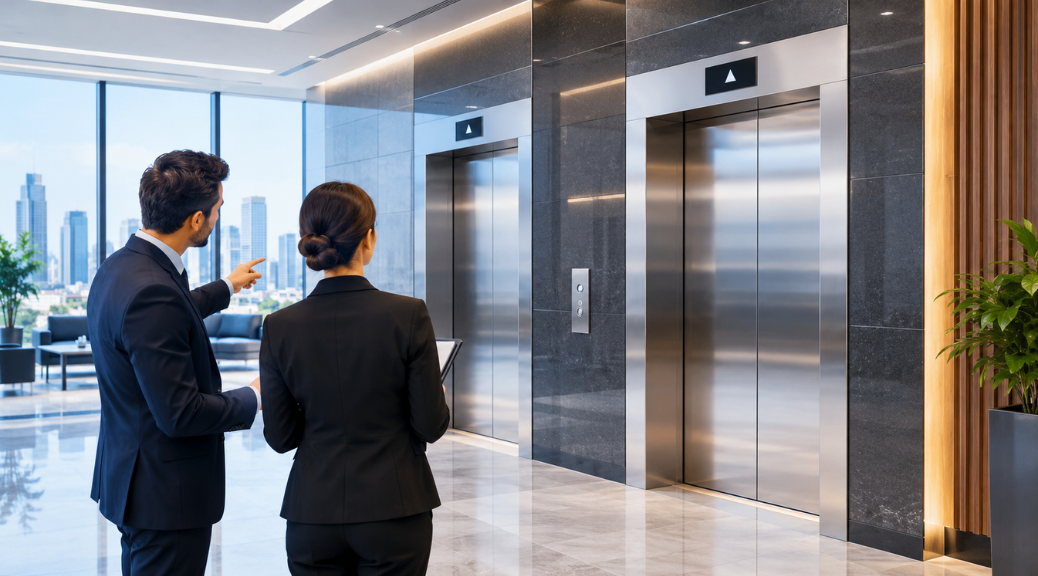
Commercial Lift Suppliers in Delhi: What Businesses Should Consider Before Choosing One
For an office building, hotel, hospital, shopping complex, warehouse or industrial facility, a commercial lift is more than a transportation system. It is an important part of the building’s daily operations.
A poorly selected lift can lead to frequent breakdowns, operational disruption, higher maintenance expenses and inconvenience for employees, customers and visitors. On the other hand, the right commercial elevator can provide reliable movement of people or goods while supporting the building’s long-term operational requirements.
This is why businesses searching for commercial lift suppliers in Delhi should look beyond the initial quotation.
Lift capacity, building requirements, safety systems, installation expertise, energy consumption, maintenance, spare-parts availability and technical support all deserve careful consideration before making a purchase.
Whether you are a builder, architect, facility manager, warehouse operator, hotel owner or business owner, this guide explains what to evaluate before choosing a commercial lift supplier in Delhi.
Table of Contents
Why Choosing the Right Commercial Lift Supplier Matters
Commercial elevators often operate much more frequently than residential lifts.
An office building may experience heavy passenger movement during opening and closing hours. Hotels may require continuous movement throughout the day. Warehouses and industrial facilities may need lifts for transporting heavy goods and equipment.
The consequences of choosing the wrong supplier can therefore extend beyond inconvenience.
Potential problems may include:
- Frequent breakdowns
- Longer equipment downtime
- Higher maintenance costs
- Delayed spare parts
- Poor installation
- Inadequate technical support
- Unexpected project costs
- Difficult warranty claims
- Disruption to business operations
The objective should not simply be to purchase a lift at the lowest possible price.
The objective should be to select a commercial elevator solution that is appropriate for the building and sustainable to operate over the long term.
Understand Your Commercial Building Requirements First
Before contacting commercial lift suppliers, businesses should understand their own requirements.
A supplier can recommend the appropriate solution only after considering the building, expected traffic and intended usage.
Important factors include:
Number of Floors
The number of floors and travel distance can influence the type, speed and configuration of the elevator.
Passenger Traffic
An office with hundreds of employees will have different requirements from a small commercial building.
Consider:
- Number of users
- Peak-hour traffic
- Average daily usage
- Expected future occupancy
Load Capacity
Determine whether the lift will primarily carry people, goods or both.
Commercial passenger lifts and goods lifts are designed around different requirements.
Usage Frequency
A lift intended for continuous commercial operation may require a different configuration from one used occasionally.
Available Shaft Dimensions
The available shaft, pit and headroom can influence which elevator systems are feasible.
Building Type
A lift requirement for an office is different from that of:
- A hotel
- Hospital
- Shopping mall
- Warehouse
- Factory
- Retail facility
- Industrial building
Power Availability
Electrical infrastructure should be considered before finalizing the elevator system.
Passenger or Goods Movement
Businesses should clearly establish whether the primary purpose is:
People movement, goods movement, or both.
This helps the supplier recommend an appropriate solution.
Choose the Right Type of Commercial Lift
There is no single commercial lift that is suitable for every building.
The appropriate solution depends on the building’s design, usage, traffic, capacity and operational requirements.
| Lift Type | Suitable For |
| Passenger Lift | Offices, hotels and commercial buildings |
| Goods Lift | Warehouses, factories and retail facilities |
| Hospital Lift | Hospitals and healthcare facilities |
| MRL Lift | Buildings where machine-room space is limited |
| Capsule/Glass Lift | Hotels, malls and premium commercial spaces |
Passenger Lifts
Passenger elevators are designed primarily for transporting people between floors.
They are commonly used in:
- Offices
- Hotels
- Commercial buildings
- Residential-commercial developments
- Institutional buildings
Capacity and configuration should be selected according to expected traffic.
Goods Lifts
Goods elevators are designed for transporting materials, equipment and products.
They can be useful in:
- Warehouses
- Manufacturing facilities
- Factories
- Retail buildings
- Commercial storage facilities
The required load capacity and cabin dimensions should be determined according to the type of goods being transported.
Hospital Lifts
Hospitals have specific movement requirements involving patients, medical equipment, attendants and staff.
Hospital lift selection should therefore consider cabin dimensions, loading requirements, smooth operation and the building’s operational needs.
Machine Room Less Lifts
MRL systems can be useful where building design or available space makes a conventional machine room difficult to accommodate.
However, suitability should be evaluated on the basis of the specific building design.
Capsule and Glass Lifts
These elevators can provide a visually distinctive solution for hotels, malls, showrooms and premium commercial spaces.
Their design can make the elevator part of the building’s architectural experience rather than simply a functional system.
What to Check When Comparing Commercial Lift Suppliers in Delhi
Once your requirements are defined, you can begin comparing suppliers.
1. Manufacturing Capability
Find out how the supplier operates.
Ask:
- Does the company manufacture elevators?
- Does it assemble systems in-house?
- Which components are sourced externally?
- What quality-control procedures are followed?
- Does the company have its own technical team?
A supplier’s manufacturing capability can provide useful insight into its ability to customize, troubleshoot and support the equipment.
However, do not assume that a company is automatically better simply because it manufactures products. Evaluate the complete product and service offering.
2. Safety Features and Compliance
Safety should be one of the first evaluation criteria.
Ask the supplier to explain the safety systems included in the proposed elevator.
Depending on the elevator type and applicable requirements, these may include:
- Door interlocks
- Door sensors
- Overload protection
- Emergency alarm
- Emergency lighting
- Emergency rescue systems
- Braking systems
- Safety mechanisms
- Other applicable protective systems
Businesses should also ask about applicable testing, approvals and documentation before commissioning the elevator.
Safety and regulatory requirements should be verified for the specific project rather than assumed from a generic product specification.
3. Installation Expertise
A quality elevator still requires proper installation.
Installation can involve:
- Site inspection
- Shaft measurements
- Pit and headroom verification
- Electrical requirements
- Structural coordination
- Equipment installation
- Door installation
- Testing
- Commissioning
Ask the supplier:
Who will install the elevator?
Also ask whether installation is performed by the company’s own technical team or through an external contractor.
A clear installation process can reduce the possibility of delays and coordination problems.
4. Customization Options
Commercial buildings can have very different requirements.
Depending on the application, businesses may need customization related to:
- Cabin dimensions
- Load capacity
- Number of stops
- Speed
- Door configuration
- Cabin finishes
- Flooring
- Lighting
- Control panels
- Interior materials
- Accessibility requirements
Customization should always be balanced with the technical and safety requirements of the elevator.
5. After-Sales Service
After-sales service is one of the most important factors when selecting a commercial lift supplier.
A commercial elevator can be critical to daily business operations. Extended downtime can affect employees, customers, tenants and logistics.
Ask about:
- AMC options
- Preventive maintenance
- Emergency breakdown support
- Service response time
- Technician availability
- Spare parts
- Warranty support
- Modernization
- Repair services
Spire Elevators lists maintenance, technical service, repairs, upgrades and modernization among its elevator services.
6. Previous Commercial Projects
Experience should be relevant to your project.
Instead of asking only:
“How many years have you been in business?”
Ask:
“Have you completed projects similar to ours?”
Look for experience with:
- Office buildings
- Hotels
- Hospitals
- Retail buildings
- Shopping complexes
- Warehouses
- Factories
- Industrial facilities
Relevant project experience can help a supplier understand the operational requirements of your building more effectively.
Compare the Total Cost, Not Just the Initial Quote
One of the most important considerations for businesses is total lifecycle cost.
The initial purchase price is only one part of the financial equation.
A more useful way to think about commercial elevator cost is:
Initial Cost + Installation + Energy Consumption + Maintenance + Spare Parts + Downtime
Initial Cost
This includes the elevator equipment and agreed installation scope.
Installation Cost
Check whether installation is included in the quotation or charged separately.
Energy Consumption
Depending on the elevator type, usage frequency and building requirements, energy consumption can contribute significantly to long-term operating costs.
Maintenance Cost
Regular maintenance is necessary to keep the elevator operating reliably.
Ask about AMC pricing and what services are included.
Spare Parts
The availability and cost of replacement components can influence long-term maintenance expenses.
Downtime
This is particularly important for commercial properties.
If an elevator remains unavailable for an extended period, it may affect:
- Employee movement
- Customer experience
- Tenant operations
- Hotel guests
- Material handling
- Business productivity
Therefore, businesses should consider reliability and service support as part of the total cost of ownership.
Questions to Ask a Commercial Lift Supplier Before Finalizing
Before signing an agreement, ask the supplier these questions:
- What lift capacity is recommended for our building?
- Which type of commercial lift is suitable for our usage?
- What safety systems are included?
- What are the shaft, pit and headroom requirements?
- What civil work is required?
- What electrical work is required?
- What exactly is included in the quotation?
- What is the expected installation timeline?
- What testing and commissioning procedures are followed?
- What warranty is provided?
- What does the AMC cover?
- How quickly can technical support be provided?
- Are spare parts readily available in Delhi NCR?
- Who will handle future repairs?
- Can the elevator be upgraded or modernized later?
Getting clear answers before placing an order can prevent misunderstandings later.
Common Mistakes Businesses Should Avoid
Choosing Only on the Basis of Price
The cheapest quotation is not necessarily the most cost-effective option.
Compare specifications, safety, installation, warranty and service support before making a decision.
Not Conducting a Site Inspection
A commercial lift should be selected after understanding the actual building conditions.
Skipping a site survey can create installation and structural challenges later.
Ignoring Maintenance Terms
Always understand what the AMC includes, how frequently preventive maintenance is performed and how breakdown calls are handled.
Not Checking Safety Documentation
Do not rely only on verbal assurances.
Ask for relevant documentation, test reports, approvals and technical information applicable to the project.
Selecting an Unsuitable Capacity
A lift that is too small for the expected traffic can create operational problems.
Similarly, specifying unnecessary capacity can increase project and operating costs.
Not Clarifying Civil Work
Clearly establish who is responsible for:
- Shaft construction
- Pit work
- Structural modifications
- Electrical connections
- Masonry
- Finishing
Ignoring Spare-Part Availability
Ask how replacement components will be sourced and how quickly they can normally be supplied.
Not Checking Previous Commercial Installations
Relevant project experience can provide useful insight into the supplier’s capabilities.
Why Businesses in Delhi Need Local Lift Support
For commercial elevator projects, local technical support can be valuable.
A Delhi or Delhi NCR-based supplier can potentially make it easier to coordinate:
- Site inspections
- Installation
- Maintenance
- Preventive servicing
- Breakdown support
- Spare parts
- Technical consultations
- Modernization
This can be especially important for commercial buildings where elevator downtime can directly affect operations.
Local support can also simplify communication between the elevator company and other project stakeholders such as:
- Architects
- Builders
- Facility managers
- Civil contractors
- Electrical contractors
- Property owners
The key is not simply choosing a company because it is local, but evaluating whether it has the technical infrastructure and service capability to support the project.
Why Choose Spire Elevators for Commercial Lift Solutions?
For businesses searching for commercial lift suppliers in Delhi, the most important consideration is whether the supplier can support the complete lifecycle of the elevator.
Spire Elevators provides elevator solutions for residential, commercial and industrial applications and lists manufacturing, installation, maintenance, repair, upgrades and modernization among its services.
Its elevator portfolio includes solutions such as:
- Passenger elevators
- Goods lifts
- Hospital lifts
- Capsule elevators
- Home lifts
- Other customized elevator solutions
Manufacturing and Installation
Spire has a manufacturing facility in Daulatabad Industrial Area, Gurgaon, and provides elevator installation services as part of its overall offering.
For businesses in Delhi NCR, a regional manufacturing and service presence can help with project coordination and technical support.
Customized Commercial Solutions
Commercial buildings have different requirements depending on their size, traffic and purpose.
A suitable elevator solution can be planned around factors such as:
- Load capacity
- Number of floors
- Usage
- Building design
- Cabin requirements
- Available space
Maintenance and Technical Support
Spire also provides maintenance, repair, upgrades and modernization services, allowing businesses to consider long-term elevator support rather than treating installation as a one-time purchase.
Solutions for Different Applications
From passenger movement to goods transportation and specialized commercial requirements, businesses can evaluate different elevator configurations based on their building and operational needs.
The right solution should always be selected after a proper assessment of the site and intended usage.
Final Thoughts
Choosing a commercial elevator supplier is a business decision—not simply a purchase decision.
The right supplier should be evaluated on:
Engineering capability + Safety + Suitable Capacity + Installation + Maintenance + Spare Parts + After-Sales Support + Total Lifecycle Cost
Whether you are developing an office building, hotel, hospital, warehouse, retail facility or industrial property, take the time to understand your requirements before comparing quotations.
Do not ask only:
“Which supplier offers the lowest price?”
Ask:
“Which supplier can provide the right elevator, install it correctly and support it throughout its operating life?”
For businesses looking for commercial lift suppliers in Delhi, Spire Elevators offers elevator manufacturing, installation, maintenance, repair, upgrades and modernization services for different commercial and industrial requirements.
A well-planned elevator investment can support safer, smoother and more reliable building operations for years to come.
Frequently Asked Questions
What should businesses consider when choosing commercial lift suppliers in Delhi?
Businesses should evaluate manufacturing capability, elevator type, capacity, safety systems, installation expertise, customization, warranty, maintenance, spare-parts availability and after-sales support.
The lowest quotation should not be the only deciding factor.
How do I choose the right commercial lift capacity?
Capacity should be determined according to the type of usage, passenger or goods traffic, building size, expected peak demand and operational requirements.
A site and usage assessment by an experienced elevator supplier can help determine the appropriate capacity.
Which type of lift is best for an office building?
Passenger elevators are commonly used for office buildings, but the appropriate configuration depends on factors such as building height, number of users, traffic patterns, available space and required capacity.
For a high-traffic office, elevator planning should consider peak-hour movement rather than only average usage.
What should be included in a commercial lift quotation?
A detailed quotation should ideally specify:
- Elevator model/type
- Capacity
- Speed
- Number of stops
- Cabin specifications
- Door configuration
- Safety features
- Installation
- Testing and commissioning
- Civil and electrical scope
- Warranty
- AMC options
- Taxes
- Exclusions
How important is after-sales service for commercial elevators?
It is extremely important.
Commercial elevators can operate frequently, and prolonged downtime may affect employees, customers, tenants or material movement.
Preventive maintenance, breakdown support and spare-parts availability should therefore be evaluated before selecting a supplier.
Do commercial lifts require regular maintenance?
Yes. Regular professional maintenance is important for maintaining reliable and safe elevator operation.
The recommended maintenance schedule depends on the equipment, usage and manufacturer’s recommendations.
Can commercial lifts be customized according to building requirements?
Yes, many commercial elevator systems can be customized or configured according to factors such as capacity, cabin dimensions, doors, finishes, speed and building requirements.
However, customization must remain within the technical and safety parameters of the selected elevator system.